
Satellite internet is a critical solution to the connectivity of places where other fiber, cable, or 5G networks do not exist. Whereas metropolitan cities have access to fast-speed internet and many options, remote and rural areas mostly rely on satellite broadband. Its universal accessibility contributes to its being an essential means of preserving communication and work efficiency even in the areas with obsolete infrastructure or insufficient service providers.
Satellite internet is also gaining popularity although it is a little bit slower and even costlier. It is specifically noteworthy to the users who value connectivity in places where other options do not work. Since there are now rural homeowners and RV travelers, it is imperative to have a clear understanding of the reliability and limitations of the use of satellite internet before deciding to use it or not.
What Is Satellite Internet?
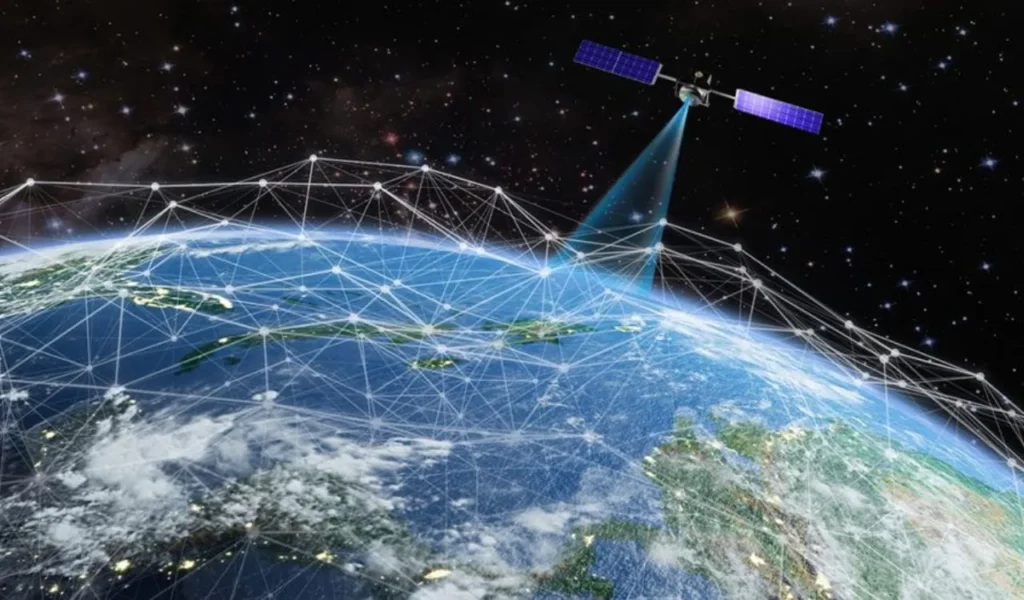
Satellite internet is a form of broadband connection, which communicates through satellites that are in the earth orbit. It does not need wired infrastructure as fiber or cable, and is able to connect to any place within the coverage area of the satellite. A satellite dish is installed on either the home or mobile unit of the user and signals are sent and received, which gives the user access to the internet even in isolated or inaccessible locations.
It can be used as an independent or as a reserve internet source, according to the requirements of the user. Its speed is typically slower than fiber or cable but with technological improvements like low Earth orbit (LEO) satellites, the latency has dropped and its performance is overall better. Satellite internet can be a viable option in cases where there are other networks that are unreliable or inaccessible.
The Best Reasons to use Satellite Internet
Although satellite internet has lower speeds than fiber or cable, there are a number of strengths that are attractive with the internet. The reason is that with its broad range, users in remote cabins, rural farms, and RVs are able to remain connected anywhere in the country. It has an easy installation procedure and only low technical skills are needed during the maintenance process.
Other key reasons include:
- No Increased Costs: The majority of plans freeze rates over a certain time.
- Wireless Infrastructure: There is no need of cables or phone lines.
- Dependable Lifeline: This is used in times of disaster when wired connections are not available.
- Ease of Installation: Easy installation at home, cabin or on the move.
These have all resulted in satellite broadband being a safe, affordable and convenient internet service to a large number of users.
The Reliability of Satellite Internet?
Satellite internet is mostly good in normal operations like browsing, emailing and video calls. Its greatest advantage is in locations that do not have traditional wired networks or those that are blocked. In recent years, satellites, in particular LEO systems, have made a big difference in minimizing the latency and improving performance, moving satellite internet nearer to fiber reliability in most instances.
Nevertheless, the environmental factors may influence reliability. Connection may be temporarily lowered by heavy rain, snow or storms. These are some of the limitations that users should keep in mind when they consider satellite broadband as a work-from-home solution, in online streaming, or any other activity that requires an internet connection.
Advantages and disadvantages of Satellite Internet
Satellite internet has several advantages, and it has disadvantages. Knowledge about the advantages and disadvantages will make users make an informed decision depending on their demands.
Pros:
- Large rural and remote areas coverage.
- No dependence on hard wired infrastructure.
- Disaster-proof connectivity
- Easy installation and maintenance.
Cons:
- Less a speed than fiber or cable.
- Delay increased, which impacts online gaming and streaming.
- Connection quality can be affected by weather.
- Minor increased cost over wired.
Taking these factors into consideration enables the users to understand whether they should use satellite internet based on their lifestyle and place.
Who Can Take the Advantage of Satellite Internet?
The satellite broadband best suits those users who are not in areas where cable or fiber services are accessible. The rural dwellers, off-grid homeowners, individuals in cabins or cottages use the satellite as their main internet source. RV owners, remote workers and travelers who require constant connectivity when they are on the move also benefit.
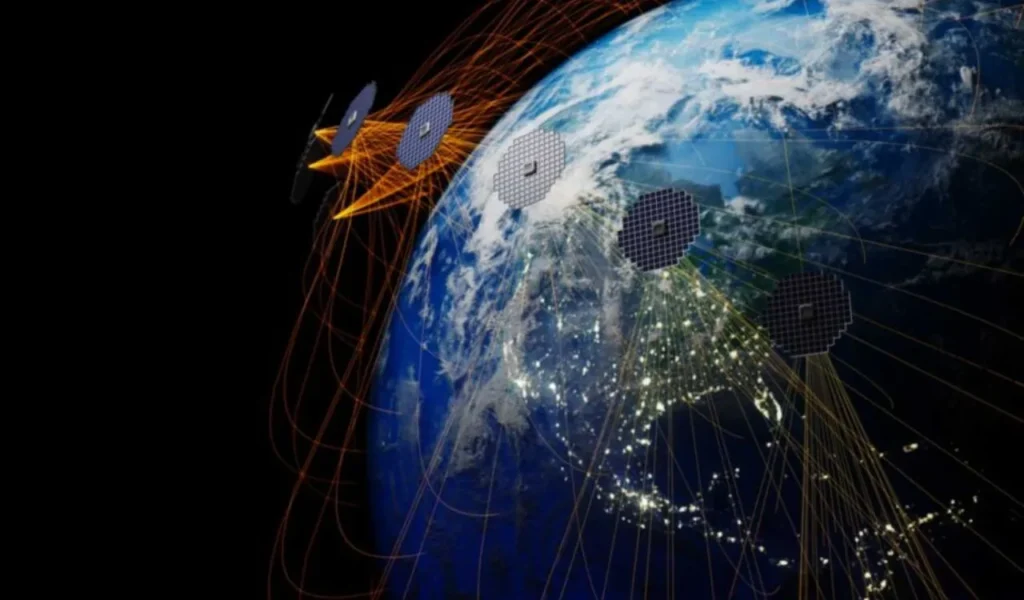
Satellite internet is also a very good backup option in the times of infrastructure failure. In case of homes or offices that rely on the internet to communicate, the presence of a satellite connection is so that the communication is not interrupted in the event of natural disasters or outage of wired networks.
Satellite Internet in Rural Areas
Traditional ISPs tend to invest little in rural communities, which leaves them with little choice of wired internet. Satellite broadband helps to fill this gap through the delivery of a reliable access without consideration of the location. Instead of being dependent on the presence of fiber and cable, farms, ranches and small villages can continue to access communication, remote work, and entertainment services.
Satellite is perfect in rural areas because it has a wide coverage and does not rely on the local infrastructure. Online education, telemedicine and government services would be available to the user where they would have been restricted by the issue of connectivity. These communities are not marginalized because they use satellite to be in touch and be productive.
Mobile and Remote Mobile Satellite Internet
Satellite internet is advantageous to the travelers, RV owners and remote workers in terms of mobility without compromising connectivity. Portable satellite systems and installed systems enable users to be online when they are camping, boating, or working at beautiful places. The relationship is consistent even in the regions that are distant to cities.
Also, satellite internet is ideal among the outdoor lovers who use GPS, mapping, and streaming services when traveling. It will offer a reliable connection in the most distant locations unlike in mobile hotspots or cellular networks, and thus, it is useful to individuals who are on the move.
Satellite Internet shortcomings
Satellite internet is very convenient, but it is also limited in nature. Speeds tend to be slower than fiber or cable, so it is harder to stream 4K or competitive play games online or to consume data-intensive applications. Latency may have an impact on real time communication and gaming.
The other possible cause of concern is data limits and increased monthly charges. Only when other networks are not available or as a backup to a fiber or cable connection should satellite be considered as a primary option by the user. Needs and location assessment makes sure that the best use is achieved without any unforeseen disappointments.
FAQs
Conclusion
Satellite internet is a good and reliable option to rural and remote and mobile users. It is a good alternative with slower speeds and higher latency because it has a broad range, is easily installed, and resistant to disasters. It can be used as a backup or as a primary connection to provide constant connectivity when the other alternatives do not work.
To people who cannot access the internet through traditional carrier systems, such as those that rely on their mobile phones, satellite internet provides them with uniform access, which closes the digital divide and helps them in communication, work, and entertainment. Knowing its advantages, disadvantages, and the target audience, the users are able to make conscious choices and experience connectivity at any place, at any time.